Greek yoghurts: Dannon Oikos versus Voskos

I’ve always been a big fan of yoghurt (or yogurt, if you prefer), but wasn’t ever really fond of the Greek yoghurt. I think that the primary reason that I don’t find like the majority of Greek yoghurt is due to its extremely thick, and sometimes dense texture. That being said, Greek yoghurt has some outstanding nutritional value (such as having double [or more] the protein of “regular” yoghurt, and also being fat-free [some of it, anyway]). It also serves as a decent source of calcium and potassium (although you will certainly need more of each in your daily regime).

Anyway, I’ve tried many different brands of Greek yoghurt, and though I was able to get through a container, it wasn’t enjoyable in the least. A couple weeks ago at the local grocer, they had a special on all varieties of Voskos Greek Yogurt. Seeing as I can’t really pass on a good deal, I grabbed a few different types (some with fruit, some with honey, some with granola mix-ins), and took them with me as a snack.
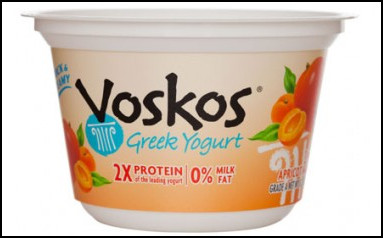
Voskos Greek Yogurt with fruit

As I had guessed, though, the yoghurt was incredibly thick and almost had a grittiness to it. It didn’t have a mouth feel that I liked, and the flavours were quite tart, even though a few of them had sweet fruit bits mixed in. Now, just because I didn’t care for it doesn’t mean it wasn’t well made. I believe that Voskos produces a high-quality product, but that it is just one that is unappealing to me.

The next week, interestingly, the same grocer was featuring Dannon Oikos Greek Yogurt in their sale. Being determined to find a Greek yoghurt that I enjoyed (or just incredibly stubborn; however you want to look at it), I picked up a few of them as well. I thought that these cups might be different than most of the others that I had tried, because they had the fruit on the bottom of the cup, instead of blended into the yoghurt itself.
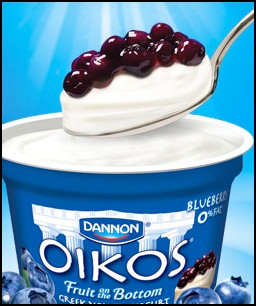
Dannon Oikos Greek Yogurt - Fruit on the bottom

I picked up a couple different flavours, including black cherry, blueberry, vanilla, and strawberry. I’ve had the black cherry and blueberry thus far, and they are great! Surprisingly, they don’t have nearly the viscosity as the other Greek yoghurt that I’ve had in the past. Instead, the yoghurt is incredibly smooth and creamy. It is certainly still thicker than a “traditional” yoghurt, but I would say that the difference is slight. The fruit on the bottom is more of a compote, with a nice light syrup mixed with the fruit. When that fruit compote is mixed together with the yoghurt, it further lessens the viscosity, and adds a sweetness that just isn’t present in the varieties that mix the fruit before packaging.

After trying several different types and brands of Greek yoghurt, I have finally found one that I like as much (if not more so) than the standard yoghurt brands that I’ve enjoyed for years. Try it for yourself, and see what you think. If you’re like me, and have previously stayed away based on texture, the Dannon Oikos with the fruit on the bottom might be a winner for you too. 🙂

Cheers,
Zach

Hand me the newspaper

A friend sent me an email recently, and I thought that the attached image was pretty funny. Behold the woes of technology.

Newspaper versus ipad - spider

Cheers,
Zach

Wine tasting review – 21 July 2012

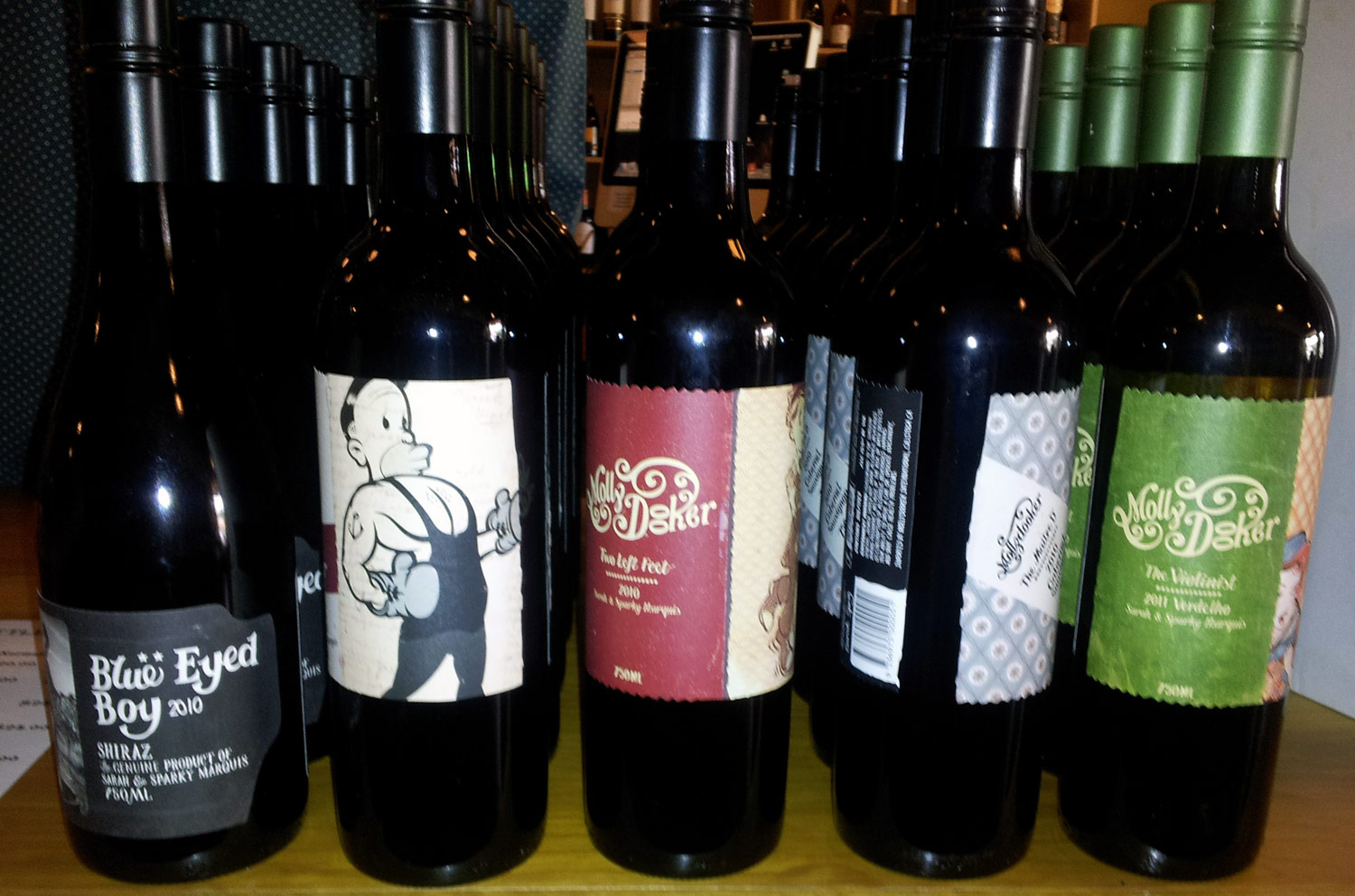
This week’s wines were all from South Australia, and from McLaren Vale, which is just south of the city of Adelaide. For those of you that don’t have a good sense of locations in Australia, if you were to draw a line due West from Sydney until you hit the opposite coast of the southern portion of the continent, you would be about 100km or so north of McLaren Vale. All of the pours today came from producer Mollydooker. Anyway, let’s get to the wines.

HV Bottle Shop tasting - 21 July 2012
Wines are discussed from right to left

The first was “The Violinist,” which was a Verdelho, was a nice white with a deep golden colour on tilt, but was almost completely clear straight on. It left a thin ring, and had virtually no legs. Aged in two-thirds American Oak, and one-third French Oak, it had a slightly more mellow mouth feel to it than I would have expected. The aromas were prominently pear and apples, and they came through in the taste as well. It was crisp, but slightly too acidic on the finish for my liking.

The second pour was “The Maitre D'” Cabernet Sauvignon, which had a very nice deep ruby centre and lighter red edge. It had a medium ring, and left thick, slow-running legs. There was a smokiness to the aroma, but it was primarily fruit and berry-forward. The raspberry was especially prominent, but was met nicely with some hints of clove and even some licorice flavours. It had a surprisingly light mouth feel for a Cabernet Sauvignon, but a strong fruit finish.

The third offering was the “Two Left Feet” blend of 72% Shiraz, 16% Merlot, and 12% Cabernet. It had a deeper garnet colour with less contrast between the centre and edge than the previous wine. Unlike the Cabernet, the warm spice was prominent to me in both aroma and taste. It had a slight vanilla edge to it, but was very fruit-forward. As it was primarily Shiraz (which is known for being boldly fruity), the tastes of blackberry were quite intense. It was medium bodied, but seemed anticlimactic to me at the finish.

The fourth wine of the day was “The Boxer,” which was 100% Shiraz, had a nice peppery aroma with some hints of anise. It was lighter than the “Two Left Feet,” but did have a prominence of oak in the finish. The spice was again very much in the foreground, but this time I tasted cinnamon and warm vanilla. Again, as a Shiraz, the fruit was bold and powerful.

The fifth selection was the “Blue Eyed Boy” Shiraz (100%), and was in my opinion, a more nicely crafted wine than “The Boxer,” but had very similar qualities. On the berry side, I tasted more blueberry than blackberry, but the spices and fruit prominence remained. Though I’m generally not a big fan of Shiraz, I could see having a glass of this wine. As far as food pairings, it would have to be a very powerfully flavoured dish in order to stand up to the strength of the wine. Something like a highly aromatic Thai Curry (green, preferably) would probably work, as would something with high fat content like roasted duck.

The final selection (which isn’t pictured above) was the “Carinval of Love” Shiraz, and had a very dark purple centre blending to a nice deep red at the edge. It, like the others, was very fruit-forward, and had a lovely raspberry and plum finish. This wine, which is at the top of the Mollydooker’s production, was exquisitely crafted and was able to round off the boldness of the Shiraz nicely.

I’m generally not a big fan of Shiraz, because they are known for very bold fruit flavours. As I like more “Old World” style wines, Shiraz (especially from Australian producers) tend to be too powerful for my liking. That being said, Mollydooker is an exceptional producer, continuously winning prestigious praise from The Wine Advocate (E. Robert Parker), and Wine Spectator. Their wines are wonderful for what they are, and even though I don’t prefer the varietal, I greatly appreciate the skill and elegance behind their wines.

Cheers,
Zach